
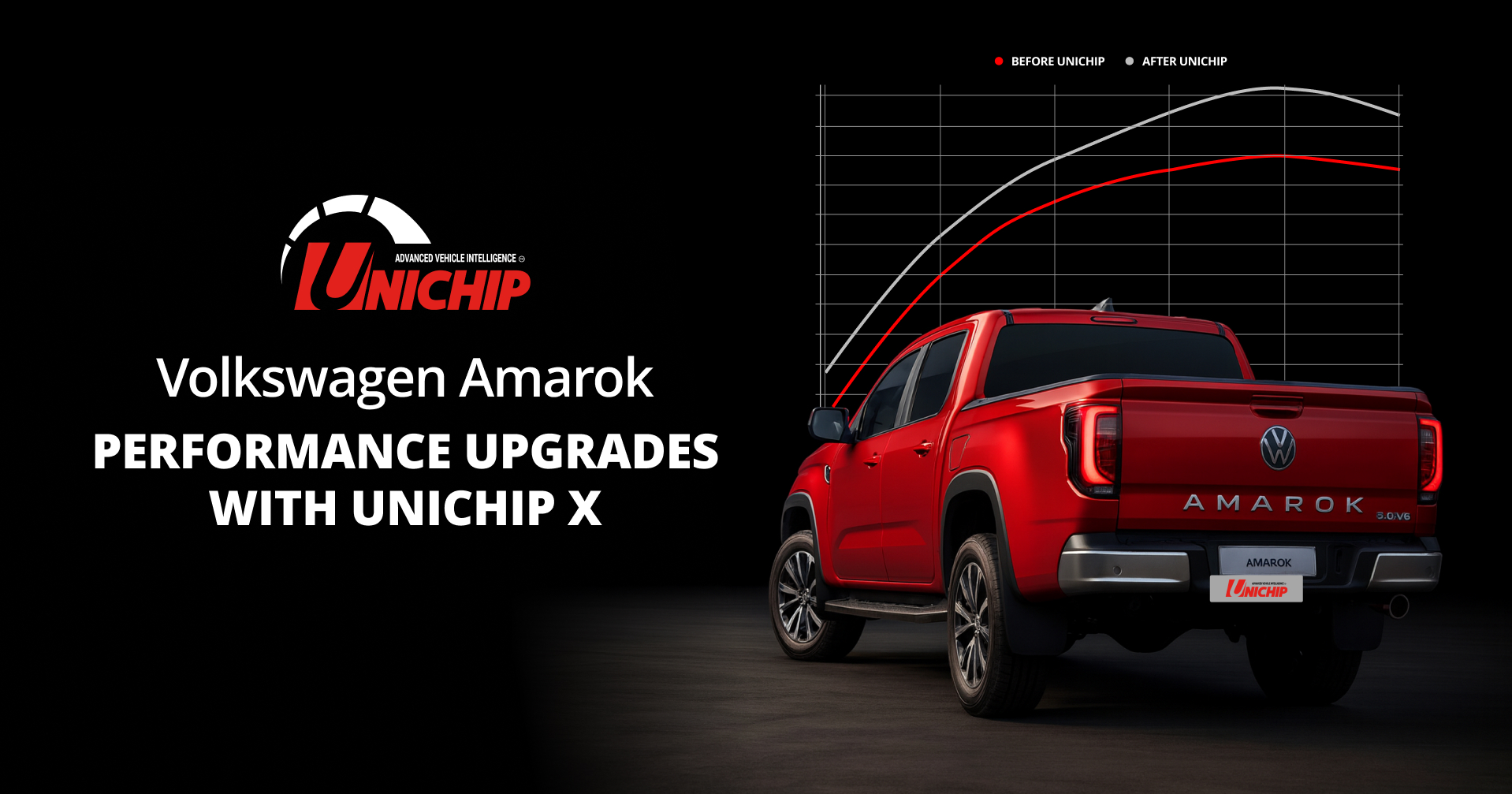
What Are VW Amarok Upgrades? (Quick Definition)
VW Amarok upgrades refer to modifications that improve performance, drivability, load handling, and durability. These upgrades can include engine tuning, suspension improvements, intake and exhaust changes, Towing capability en Reliability and overlanding accessories, but their effectiveness depends on how well they are integrated and calibrated.
Not All Upgrades Deliver Real Results
The VW Amarok is a capable platform, particularly in diesel form, with strong torque and load-carrying ability. As a result, it is commonly modified for towing, off-road use, and overlanding.
However, not all upgrades produce measurable performance gains.
Many bolt-on modifications change sound or appearance without improving how the vehicle performs under load. Real improvements come from balanced upgrades supported by proper calibration.
The Most Common VW Amarok Upgrades
Owners typically focus on the following upgrade categories:
Engine and Performance Upgrades
- Engine tuning
- Intake systems
- Exhaust systems
Drivetrain and Load Handling
- Gear ratio adjustments (in some builds)
- Transmission upgrades (where applicable)
Suspension and Off-Road Capability
- Lift kits
- Upgraded shocks and springs
- Tyre upgrades
Overlanding and Touring Setup
- Roof racks
- Drawer systems
- Recovery equipment
- Auxiliary fuel or water storage
Each of these upgrades affects vehicle load, airflow, or drivetrain stress in different ways.
Why Engine Calibration Matters More Than Hardware
Many VW Amarok upgrades focus on hardware changes, but modern ECUs control how the engine responds to those changes.
Without proper calibration:
- Intake upgrades may not increase airflow effectively
- Exhaust changes may not translate into usable power
- Additional load from accessories increases engine stress
- Torque delivery remains constrained by factory limits
This is why calibration is often more important than the upgrade itself.
Where the Unichip Fits In
A Unichip piggyback system allows VW Amarok upgrades to work together effectively by refining how the engine responds.
It works alongside the factory ECU and allows:
- Fuel delivery adjustments to match airflow changes
- Controlled boost optimisation (on turbo diesel models)
- Smooth torque delivery under load
- Live dyno tuning validation
Because it does not overwrite the ECU, it retains:
- Factory safety strategies
- Torque management limits
- Thermal protection systems
For a full explanation, see what is a Unichip.
Why Dyno Tuning Is Essential for Amarok Upgrades
The VW Amarok is often used in demanding conditions such as towing and overlanding.
Dyno tuning ensures that upgrades perform safely by allowing:
- Monitoring of AFR, boost, and EGT under load
- Verification of torque delivery
- Identification of thermal stress
- Calibration adjustments in real time
This is particularly important when multiple upgrades are combined.
Torque Management and Drivability
One of the most important outcomes of proper tuning is controlled torque delivery.
In a modified Amarok:
- Abrupt torque spikes can stress gearboxes and drivetrains
- Excessive load can trigger ECU intervention
- Inconsistent power delivery reduces drivability
A properly calibrated setup improves:
- Throttle response
- Low-speed control off-road
- Towing stability
- Overall driving consistency
Thermal Management Under Load
VW Amarok upgrades often increase vehicle weight and load demand.
This leads to higher:
- Exhaust gas temperatures (EGT)
- Intake air temperatures
- Cooling system demand
Without proper tuning, these conditions can reduce reliability.
A balanced setup ensures:
- Stable EGT under sustained load
- Controlled boost behaviour
- Reduced unnecessary fuelling
Practical Upgrade Strategy
For most VW Amarok owners, the most effective upgrade sequence is:
- Assess vehicle condition and usage
- Perform a dyno health check
- Install a Unichip piggyback system
- Calibrate through live dyno tuning
- Add supporting hardware upgrades where necessary
This ensures that each upgrade contributes to real-world performance rather than isolated changes.
Closing Summary
VW Amarok upgrades can improve performance, drivability, and capability, but only when implemented as part of a balanced system.
Hardware alone does not guarantee results. Calibration determines how effectively upgrades translate into usable performance.
By combining upgrades with a Unichip piggyback system and live dyno tuning, Amarok owners can achieve controlled improvements while retaining factory ECU safety strategies.
Effective upgrades are not about adding parts. They are about making the system work together.
Frequently Asked Questions (FAQ)
What are the best VW Amarok upgrades?
The most effective upgrades focus on engine calibration, suspension, and load management rather than individual bolt-on parts.
Do VW Amarok upgrades increase power?
Some upgrades can improve power, but meaningful gains require proper tuning to balance airflow, fuelling, and torque.
Is tuning necessary after Amarok upgrades?
Yes. Without tuning, many upgrades do not translate into measurable performance improvements.
Is a piggyback system suitable for the Amarok?
A piggyback system like Unichip allows controlled optimisation while retaining factory ECU safety strategies.